Imagine walking into your local supermarket, and the sign on the door reads “The Apple, Banana & Orange Store.” It makes perfect sense when those are the only fruits on the shelves. But what happens when the owners decide to buy out the grape vineyards, the strawberry fields, and the pineapple plantations? Suddenly, that ultra-specific name starts to feel a little crowded and frankly, a bit unfair to the newcomers.
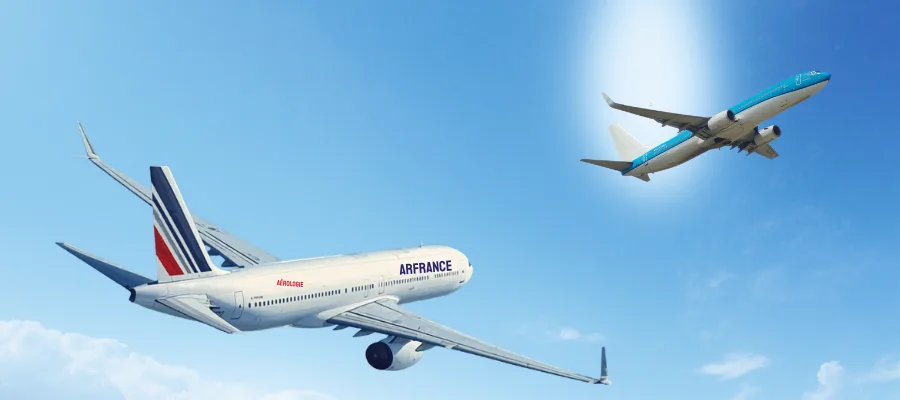
This exact corporate identity crisis is unfolding at 35,000 feet. One of Europe’s most powerful aviation giants, the Air France-KLM Group, is seriously considering dropping its two legendary names from its corporate masthead.
According to internal leaks and industry confirmations, Group CEO Benjamin Smith has made the definitive decision to sunset the “Air France-KLM” moniker for the parent company. In its place? A neutral, highly unexpected corporate umbrella name that has sent shockwaves through the aviation world: The Blue Group.
If you are a frequent flyer, don’t panic just yet. Your loyalty miles aren’t evaporating, and nobody is scraping the iconic winged seahorse off the side of French jets. But behind the scenes, a massive geopolitical and economic chess game is being played. Here is the inside story of why Europe’s aviation landscape is about to turn distinctly blue.
The Twenty-Year House Party That Ran Out of Room
To understand why a change is happening now, we have to look back to 2004. In a historic cross-border deal, Air France acquired the Dutch carrier KLM Royal Dutch Airlines. It was a union that many skeptics believed would fail. Critics predicted the larger French company would swallow the historic Dutch brand whole, turning KLM into a mere ghost of its former self.
Against all odds, the marriage succeeded. For over twenty years, the holding company operated under the joint name “Air France-KLM Group”. Meanwhile, the individual airlines retained complete operational autonomy. KLM kept its distinct light-blue livery, its hub at Amsterdam Schiphol, and its fiercely independent corporate culture. Air France maintained its elegant, navy-trimmed Parisian chic.
It was a beautiful, two-part harmony. But in 2026, the duo is officially becoming a trio.
Air France-KLM recently made a massive strategic play to acquire a majority stake (moving from an initial 19.9% to a controlling 60.5%) in Scandinavian Airlines, better known as SAS. The Stockholm- and Copenhagen-based carrier is officially ready to join the family.
Suddenly, keeping the name “Air France-KLM Group” feels incredibly narrow. If you are SAS, how does it feel to be owned by a company whose very name suggests you are a second-class citizen? And looking down the runway, what happens if the group succeeds in its current high-stakes bidding war against Lufthansa to buy TAP Air Portugal?
Calling a massive, pan-European airline conglomerate “Air France-KLM-SAS-TAP” sounds less like a premium corporate brand and more like an alphabet soup.
Learning from the Competition
The corporate rebranding strategy isn’t a radical experiment; it’s a proven survival tactic in the brutally competitive European sky.
Air France-KLM’s biggest rivals figured this out years ago. Take British Airways and the Spanish flag carrier Iberia. When they merged, they didn’t call themselves “British-Iberia.” Instead, they created a neutral parent entity called International Airlines Group (IAG). This faceless, corporate umbrella successfully manages British Airways, Iberia, Aer Lingus, and Vueling under one roof without offending national pride or sparking political friction.
Similarly, the Lufthansa Group operates a massive portfolio that includes Swiss International Air Lines, Austrian Airlines, Brussels Airlines, and Italy’s ITA Airways. Because the parent entity functions as a broader corporate machine, it can slide new airlines into its system seamlessly.
By transitioning to a neutral title like “The Blue Group,” CEO Benjamin Smith wants to transition the company from a dual-nation partnership into a borderless, centralized European empire.
Why “The Blue Group”?
At first glance, “The Blue Group” might sound like a generic tech startup or a modern art collective. But look closely at the tail fins of the airlines involved, and the poetic genius of the choice becomes clear.
Blue is the ultimate unifying thread of European aviation:
- KLM is famous worldwide for its bright, unmistakable royal sky-blue fuselages.
- Air France grounds its elegant identity in the rich, deep navy blue of the French tricolor flag.
- SAS Scandinavian Airlines features a striking, modern deep blue across its aircraft tails and engines.
Even the group’s low-cost subsidiary, Transavia, splashes shades of dark blue across its green-and-white branding.
By utilizing “Blue,” the holding company manages to find a name that is deeply rooted in the historical DNA of its founding airlines, while remaining completely neutral. It strips away the geographical dominance of Paris and Amsterdam, creating an open-ended invitation for future airlines to join the fleet without losing their identity.
Management Trouble
While the logic behind a neutral name seems airtight on paper, the rollout has been far from smooth sailing. The proposal has triggered fierce internal opposition and intense debates behind closed doors.
The heaviest pushback is brewing in the Netherlands. KLM is one of the oldest commercial airlines in the world still operating under its original name. For the Dutch public and KLM executives, the brand is a matter of profound national pride. Over the years, any attempt by the central corporate office in Paris to centralize operations or shift financial control away from Amsterdam has been met with immediate, intense suspicion.
To quiet the internal storm, airline leadership has had to issue explicit, public assurances. Rogier Verhoef, Chairman of the KLM Works Council, stepped forward to clarify the boundary: “It is not illogical to review the name when a third airline is added. However, this is separate from the names of the airlines themselves. The name KLM remains.”
In short: The company that trades on the stock market will change its name, but the planes you board at the gate will still proudly say Air France and KLM.
What This Means for You, the Traveler
For the everyday traveler, this corporate rebranding is actually fantastic news. It signals that the airline group is shifting into hyper-drive to make your travel experience smoother.
When SAS officially integrates into this newly unified group, it means total synchronization. Passengers will soon experience seamless code-sharing, fully integrated flight schedules, and a massive boost to their loyalty perks. SAS has already migrated away from the Star Alliance to join SkyTeam (the global alliance co-founded by Air France and Delta), opening up massive transatlantic routing options for frequent flyers.
Whether the corporate suits in Paris ultimately sign off on “The Blue Group” or pivot to another abstract title, the message to the aviation world is loud and clear. The era of the fragmented, fiercely national European airline is drawing to a close. The future belongs to massive, consolidated mega-groups, and the skies are about to look a whole lot bluer.
Leave a Reply